


What Would You Do If You Stopped Waiting for Permission?
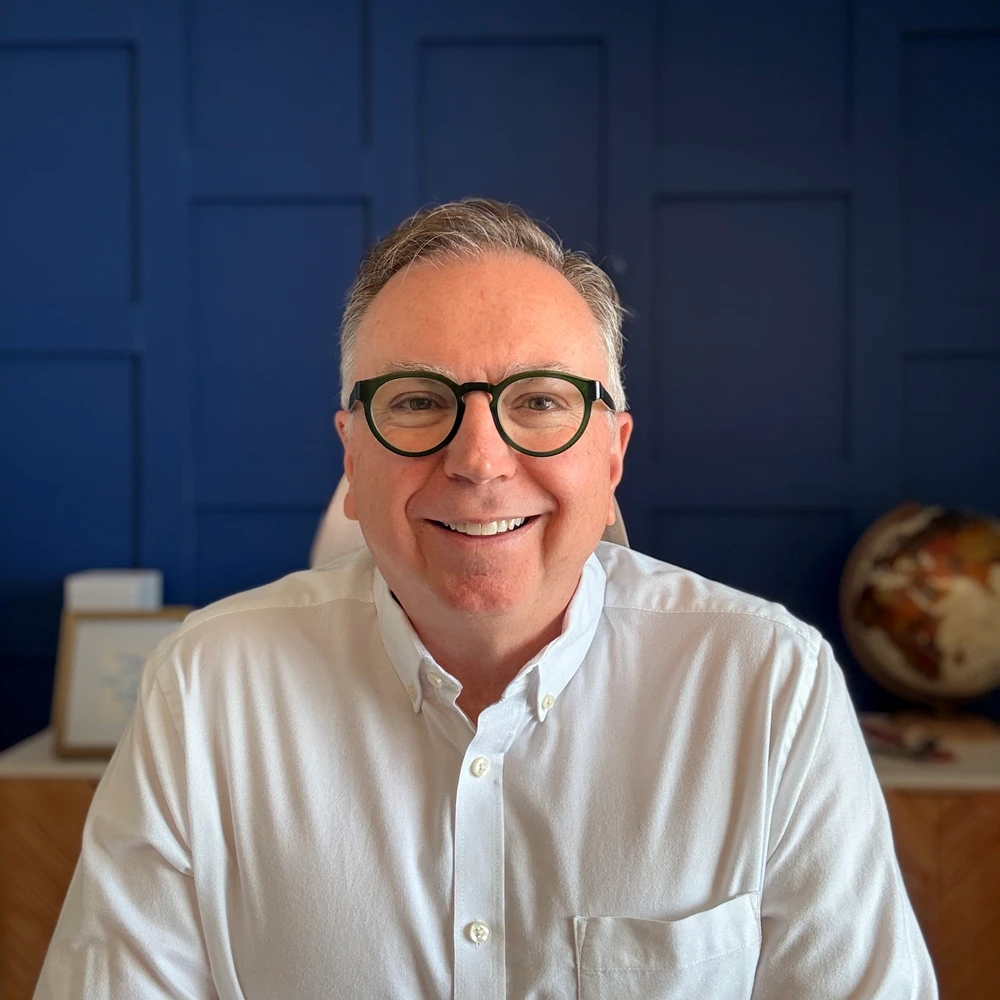
The permission was never theirs to give. It was always yours.
AUG 12, 2026

On New Year’s Day 2023, I woke up alone in my one-bedroom apartment in Stamford, Connecticut.
I’d moved there at the start of COVID as a temporary landing spot after selling my lakehouse. Temporary had started to feel “permanent” by default — not by choice, just by inertia. I’d been there three years.
I was turning 60 that year.
And lying there that morning, I asked myself a question I hadn’t let myself ask before: what the f$#% am I waiting for?
Not rhetorically. Actually. What was I waiting for? Who was going to tell me it was okay to move? To live where I wanted to live? I’d stayed in the New York area for almost thirty years — first because my first wife wanted to, then because my kids were there, then because my job was there. All legitimate reasons. But at some point, the kids were grown, I had enough years to take an early retirement, and what was left was inertia. An old assumption still running quietly in the background: that I needed someone to say it was okay before I could go.
No one was going to say it. That was the realization that had been building for a while. When I started doing coaching as a more serious side gig and it took off, I realized I could do it full time and from anywhere. There was no external reason keeping me in Stamford. There was no reason I couldn’t live where I wanted to live.
I’d wanted to live in the Boston area since my divorce in 2001. I’d thought about Scotland. London. Portugal. But I also wanted to be near family. And when I finally let myself actually decide — rather than waiting for permission to decide — it was clear.
I moved to Hull, Massachusetts. A block from the beach, with views of the bay and the ocean. Near family. Where I’d wanted to be for over twenty years.
I gave myself permission. And I didn’t need anyone else’s.
Here’s what I’ve noticed: when you ask people what they want — really want — you often get a blank stare. Or they answer a different question entirely. They tell you what somebody else wants. What they think they should want. What seems appropriate given their age or circumstances.
Someone asked me what I wanted recently and I got locked up initially. And this is my work, right? I’m a life coach. If it’s hard for me, I can only imagine how hard it is for a lot of us.
Here’s why. We learned early and well and deeply that we need permission. As little kids, we did need it — often around safety, around legitimate boundaries. But as we grew up and became more autonomous, we kept a lot of the same wiring. Our sense of identity gets hardwired in our brains around age 11 or 12 — still very much under the watchful eye of parents and teachers. The external authority figures are gone now, but the internal wiring stayed the same. And if we had overly protective parents, that wiring is extensive!
So now we look for permission from parents — even as adults. From partners. From bosses. From social media and cultural norms. From the imagined judgment of people who we think are watching and paying attention to us but aren’t. We’re like teenagers in the cafeteria.
And often from a version of ourselves that was formed under conditions that no longer exist and maybe weren’t even that healthy at the time.
There are three buckets where most of us are waiting for permission we’re never going to get.
The first is permission to want what you actually want. Not what makes sense. Not what looks responsible. Not what your family or friend group thinks. What you actually want.
A lot of us don’t even give ourselves permission to want it, never mind pursue it. Because what if I want something and I don’t get it? That fear of failure and disappointment feels dangerous. Or what if getting it disappoints somebody I love? For a lot of us with fear of abandonment or rejection from childhood, that feels really risky.
But it’s really important to get clarity about what you actually want. If you weren’t managing somebody else’s reaction to it — and that’s not your job, by the way, managing other people’s reactions to you living your life — what would you actually want?
I grew up knowing I couldn’t have certain things. Our family didn’t have much money. We were on food stamps a lot. When I was young, I deeply wanted to play the piano or some kind of instrument. I was told “no — can’t afford it.” My aunt and uncle were selling an organ. Same answer. And so the desire got stifled. It got wired in my brain as something that wasn’t okay to want. It was only in my 50s that I finally gave myself permission to want that — to start seriously pursuing the guitar. It’s harder to learn at this age than it would have been as a kid. But when I’m doing it consistently, my soul feels different.
I spent decades waiting to want something that was always mine to want.
The second bucket is permission to change. And this is a hard one. There are people who stay in careers, relationships, identities, versions of themselves they’ve outgrown, masks they’ve been wearing that don’t really represent who they are. I know people who would like to live somewhere very different than where they live — maybe even overseas — and they don’t because they’re afraid of disappointing somebody, or surprising them, or being judged for it.
And there’s the fear that changing something means you’re saying the previous version of yourself was wrong or a mistake. It’s not. When you change, you’re not repudiating what you did before. You’re just saying that was then, this is now. Version 2.0, 3.0, 4.0. It’s not a condemnation of who you were. It’s about honoring who you’re becoming.
Is there something you’ve outgrown? Some mask you’re still wearing? Some place where you feel stuck in the mud?
The third bucket is permission to take up space. To have opinions and preferences and needs and limits and boundaries. To show up and be seen and not have to apologize for it. To not feel like you need to shrink yourself just so other people aren’t uncomfortable with your brilliance or your success or your happiness.
This is particularly relevant for a lot of women, who were implicitly or explicitly taught growing up not to assert themselves, not to advocate for themselves, not to lead, not to hold other people accountable. To shrink. I dealt with this a lot with students — helping them become empowered and realize they didn’t have to apologize for how intelligent or creative or strong they were. Some people can be pretty vicious when you do show up fully — spend five minutes on social media looking at the comments! But you have the right to exist, to be seen, to flourish, to expand, to be all that you can be — the best version of your authentic self — and not have to apologize for it.
So why is this so hard?
Part of it is almost like an addiction to the need for approval. Our brains are wired for social belonging. We’re social animals. And our amygdala treats social fear the same as physical pain or danger. The fear of rejection or judgment from somebody else can feel as threatening as a saber-tooth tiger — because in tribal times, exclusion from your social group could actually mean death. The wiring is still there even though the stakes are completely different now.
Which means a lot of the time we catastrophize. We imagine the worst case scenario, blow it out of proportion, make it seem highly likely and much worse than it actually would be.
So ask yourself: what would the actual worst case scenario really be? And how likely is it? What you’ll probably find is that it’s not as bad as you feared and probably not that likely either.
And then ask yourself the question most of us forget to ask: what’s the cost of not doing it? We think about the cost of asserting ourselves, of living the life we want. We rarely think about what it costs us to keep waiting. In terms of satisfaction, growth, happiness, purpose and meaning, sense of self, pride. Being able to look yourself in the mirror and liking and respecting the person looking back at you.
Here’s the one that really landed for me: by not living the life you want to live, by not saying your truth, advocating for yourself, enforcing your own boundaries, you’re abandoning yourself. The abandonment you’re afraid of? It’s actually happening. And it’s you doing it to yourself. Your peace. Your true self. Your values. Every time you override what you know to be true for you in order to get someone else’s approval, you make a withdrawal from your own emotional bank account, your own integrity. At some point, it runs dry.
Living with integrity means acting based on your values, what you believe in, the person you want to be — the best version of your authentic self — regardless of whether someone else approves. That’s not selfishness. I was taught as a little kid that it was selfishness. It’s not. It’s self-authorship. Self-creation. Self-advocacy. Self-protection.
You already have permission. You give it to yourself. It’s always an inside job. It’s available as soon as you decide it’s available.
On New Year’s Day 2023, alone in a temporary apartment that had become permanent by default, turning 60, I finally decided it was available to me.
What are you waiting for?
I’m a life coach and founder of Integrity and Joy. If this resonated, I’d love to connect — book a free consultation at https://calendar.app.google/CsBx5mnpX7g9PFuP9 or find me at https://www.integrityandjoy.com. Or just reach out — I’d love to hear what resonated with you.


Comments